April planet stack

a view of planets

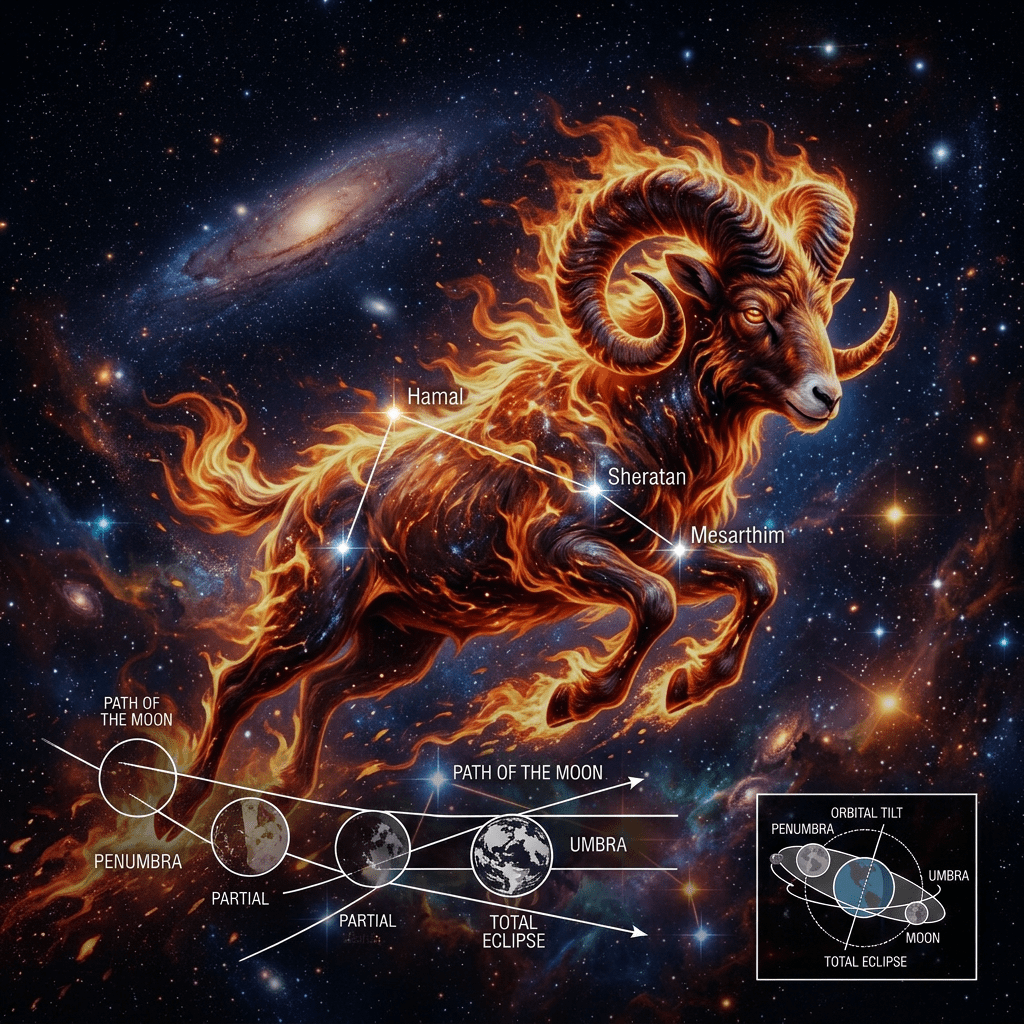
This part of April 2026 is not subtle. Between 15–27 April, Aries becomes heavily activated: Venus entered Aries on 5 April, Mercury follows around 16–18 April after its inferior conjunction phase on 4–5 April, the Moon passes through Aries 15–17 April, and the Sun reaches Aries ingress on 19–20 April, culminating in the New Moon in Aries on 27 April. Alongside these, Chiron and Eris remain in Aries, creating a concentrated field of identity, rupture, and initiation. This is not simply “energy” – it is a compression of timing. Multiple bodies converge in the same sector, removing delay and forcing action. The effect is immediate: decisions accelerate, tensions surface, and events move beyond negotiation into execution. We are in for a wild two weeks – and need to pay attention.

This pattern has clear historical precedents. In 44 BC, during the Assassination of Julius Caesar, the Sun, Mercury, and Venus clustered in Aries in the spring window, coinciding with this decisive act that shattered the Roman Republic’s balance almost overnight. Also during such a configuration, in 221 BC, during the Qin unification of China, the Aries-season concentration aligned with the final campaigns that ended centuries of fragmentation by force – only for that unity to later fracture again. Around 193–197 AD, leading into the instability of 190–210 AD, Saturn’s passage through Aries combined with inner planet cycles to trigger repeated power struggles within Rome; power was seized quickly, held rigidly, and began its long structural failure. In each case, the Aries concentration did not build systems – it broke deadlock, forced outcomes, and initiated irreversible transitions – not always for the better.

The parallel with what is happening now is obvious. Across global politics and conflict zones, leadership structures are hardening while simultaneously losing legitimacy. The Aries concentration does not create this condition- it accelerates it. What has been building behind the scenes is now out in the open and we are all aware of every move: confrontations replace diplomacy, decisions override process, and systems that cannot adapt begin to fracture. We can watch it all happen and are all caught up in it. Historically, this phase is always described as instability or collapse, but structurally it is the same mechanism repeating – pressure released through action, followed by fragmentation, and then reorganisation into a different cultural and political form. The old order does not evolve during these periods; it breaks or snaps causing untold destruction and chaos as it does so. Then, something else begins to assemble from the pieces, we can create something else from these pieces depending on how aware and organised we are – before it hardens into a structure we all know we don’t want.

Talking of war

Where we stand now is not simply “astrology” but a measurable celestial configuration. On 20 February 2026 at 11:54 UTC, Saturn and Neptune met at 0°45′ Aries, initiating a cycle associated historically with ideological restructuring and the dissolution of existing political narratives. Two weeks later, on 3 March 2026 at 06:37 UTC, a total lunar eclipse at 12°53′ Virgo forced a global moment of exposure—systems, supply chains, health structures and governance weaknesses laid bare. Meanwhile Jupiter stationed direct at 15°05′ Cancer on 10 March 2026, while Mercury stationed direct at 8°29′ Pisces on 20 March, the same day the Sun crossed the Aries equinox. Astronomically, these events coincide with an unusual clustering of planets along the ecliptic and the recent six-planet alignment of 28 February 2026, when Mercury, Venus, Jupiter, Saturn, Uranus and Neptune appeared along the same arc of sky.

The immediate sky picture continues to tighten through April. Mars enters Aries on 9 April 2026 at 15:36 UTC, followed by a series of sharp interactions: Mars conjunct Neptune on 13 April (00:29 UTC) and Mars conjunct Saturn on 19 April (17:43 UTC). In the physical sky this corresponds with a visible alignment of Mercury, Mars, Saturn and Neptune around 18 April, appearing low before sunrise. At the same time a potentially bright visitor—comet C/2025 R3 (PANSTARRS)—is predicted to become visible toward the end of April 2026, adding another symbolic marker in the heavens. Astronomically these objects are simply following orbital mechanics, but historically such compressions of planetary motion tend to coincide with periods when political structures strain under their own contradictions.

From a geo-zenith perspective the sky is pointing toward restructuring rather than collapse. The Saturn–Neptune cycle dissolves illusions while demanding new forms, yet those forms are not visible yet; they tend to emerge years after the conjunction. The difficulty lies on Earth, not in the sky: ageing leadership classes, ideological rigidity and the tendency of governments to double down on propaganda precisely when transparency is required. Under Mars activating the Saturn–Neptune conjunction through April, anger, confusion and misdirection easily combine. This is the phase where misinformation multiplies and where the most disciplined response is restraint: observe carefully, verify information, and resist the urge to fall into the simplistic binaries that geopolitical narratives demand.

By mid-July 2026, the planetary field spreads slightly, offering a temporary window of relative breathing space. Astronomically the sky features calmer configurations such as the Moon–Mars–Pleiades grouping on 11 July 2026, a quieter geometric arrangement compared with the compressed April sky. Yet the larger cycle remains active. The Saturn–Neptune conjunction marks the beginning of a long restructuring of global systems—financial, political and ideological. What replaces the present order cannot yet be clearly seen, because such structures tend to emerge gradually from collective necessity rather than deliberate design.

The practical message is simple. This period requires patience, compassion and clear thinking. Some people will be in positions where they can act; others will feel powerless while watching events unfold. Both experiences are part of the same cycle. In such periods the most rational response is to care for one’s immediate circle, question every narrative, avoid taking reflexive sides, and allow the planetary pattern itself to show when genuine windows of opportunity appear. Historically these cycles are remembered not only for crisis but also for the quiet emergence of new moral frameworks—often built by ordinary people long before governments notice them.

The long view

A longer historical view shows that these planetary compressions repeat with striking regularity. The Saturn–Neptune conjunction, which occurred on 20 February 2026 at 0°45′ Aries, repeats roughly every 36 years, and each appearance tends to coincide with periods when ideological systems dissolve and new ones struggle to form. The previous cycle in 1989 unfolded across three exact conjunctions — 3 March 1989 (10:47 UTC), 24 June 1989 (03:10 UTC), and 13 November 1989 (11:42 UTC) — during the extraordinary year that saw the fall of the Berlin Wall on 9 November 1989, the beginning of the collapse of the Soviet bloc, and the reshaping of the global political order. A similar pattern appeared earlier in 1917, when Saturn and Neptune again converged during the final phase of the First World War and the Russian Revolution of October 1917, events that destroyed one imperial system and created another ideological framework that shaped the twentieth century.

Moving further back through the cycle reveals the same pattern of upheaval and reorganisation. The 1952–1953 conjunction in Libra (21 November 1952, 17 May 1953, and 22 July 1953) coincided with the sharpening of the Cold War, the Korean War armistice negotiations, and the early construction of the ideological blocs that would dominate the second half of the twentieth century. Earlier still, the 1846–1848 conjunction coincided with the revolutionary wave that swept across Europe and the publication of Marx’s Communist Manifesto in February 1848, again marking the emergence of a powerful ideological narrative that reshaped global politics. Each appearance of the cycle seems to correspond not merely with conflict but with the birth or collapse of belief systems — political, economic, or spiritual — that define entire eras.

Extending the astronomical calculations thousands of years further back suggests how rare the present configuration may be. The 2026 conjunction occurs at 0° Aries, the astronomical “world point” marking the start of the zodiac and the spring equinox reference. Research indicates that the last time Saturn and Neptune were close to this same starting point was around 555 AD, and some ephemeris calculations suggest that an exact conjunction at this degree may not have occurred for several millennia before that. Whether or not one accepts the symbolic interpretation, the astronomical fact remains that planetary cycles repeatedly cluster around moments when human societies reorganise themselves after periods of intense pressure.

Seen in that longer arc — stretching from modern geopolitical transformations back through revolutions and ideological shifts — the present configuration appears less like an isolated crisis and more like another turning in a very old rhythm. The pattern does not dictate specific events, but it does describe the conditions under which old structures lose coherence and new ones begin to form. Historically those transitions are messy, confusing and emotionally charged, yet they are also the moments when entirely new social frameworks quietly begin to take shape beneath the surface of the visible turmoil.

Fire horse history

The Year of the Fire Horse begins on 17 February 2026 under an already charged sky, and history suggests this combination does not drift — it accelerates. Fire Horse years arrive every sixty years, and when they do, they tend to coincide with sharp social inflection points. In 1966 the Cultural Revolution ignited and youth movements surged across the West. In 1906 San Francisco was shattered by earthquake and fire, forcing modern seismic reform. In 1846 war redrew continental borders. In 1786 economic unrest exposed governmental weakness and directly paved the way for constitutional redesign. These were not gentle transitions. They were catalytic moments when pressure met ignition.

What links those years is not simple chaos but structural exposure. Weak frameworks crack first. Fire Horse energy amplifies momentum — political, social, ideological. In 2026 we enter with geopolitical conflict already active, democracies strained by polarisation, institutions mistrusted, AI reshaping labour and information at extraordinary speed, and climate stress compounding economic instability. This is not a stable foundation. Under Fire Horse conditions, such tensions do not simmer; they move. Protest movements may sharpen. Leadership turnover may accelerate. Alliances may fracture or realign with unusual speed.

Yet precedent also shows that these years do not merely destroy — they force redesign. The earthquake of 1906 transformed building standards. The unrest of 1786 strengthened constitutional governance. The upheavals of 1966 permanently altered civil rights, cultural norms and generational power. Fire does not only consume; it clears ground for new architecture. In 2026, technological governance, sovereignty debates, economic systems and leadership models are all under review. The speed of change may feel destabilising, but velocity does not equal collapse. It signals transition under pressure.

This year is unlikely to be quiet. It will likely be decisive. The Fire Horse runs, and when it runs, hesitation becomes costly. Old systems that cannot adapt will be dismantled more quickly than expected. But the same momentum can build as well as break. The question is not whether change arrives — it already has. The question is whether it is shaped consciously, or allowed to erupt uncontrolled. History suggests the Fire Horse year rewards bold restructuring and punishes stagnation. The pace will be fast. The outcome depends on how deliberately we choose to ride it.

The ring of fire

On 17 February 2026 the Sun and Moon meet at the final degree of Aquarius in an annular solar eclipse — a New Moon that does not merely begin a cycle, but completes one. The anaretic degree carries the weight of culmination: systems stretched to exhaustion, ideologies at their limit, networks revealing their fractures. Aquarius governs the collective field — technology, governance, movements, shared narratives — and this eclipse lands precisely where those themes are most visibly strained. Around us: political aggression, protests, instability, disclosures, the sense that old authorities are losing coherence. An eclipse at 29° does not whisper. It closes a chapter.

What makes this one structurally unique is timing. Saturn and Neptune converge at 0° Aries — the zodiac’s ignition point. Zero degrees is not a continuation; it is emergence. Saturn brings form, boundary, law. Neptune dissolves and re-mythologises. Their meeting at the Aries Point marks the reset coordinate of a new collective storyline. The eclipse at the end of Aquarius clears the field; 0° Aries begins the next assertion of identity, leadership and direction. The sky is architecturally precise: finish, then initiate.

In the midst of visible chaos — aggression, ideological fragmentation, institutional fatigue — this configuration suggests not collapse but reorganisation. When systems lose stability, human choice becomes amplified. Eclipses expose where we are reactive; Aries demands conscious action. The reset is not imposed from above; it is enacted through decisions made under pressure. What we defend, what we build, what we refuse to perpetuate — these become the scaffolding of the next cycle.

Working through this eclipse means resisting reflex and choosing clarity. Aquarius asks: what collective are you feeding? Aries asks: what are you initiating? The human Earth is not ending; it is recalibrating. Old frameworks are dissolving because they cannot carry the next phase. The 17 February eclipse is a threshold — not into chaos, but into responsibility. Zero degrees signal the beginning, but the beginning depends on us.

The week 10th – 16th November 2025

The week of 10–16 November 2025 opens under volatile skies, both literally and politically. Mars conjunct Mercury in Scorpio sharpens words into weapons and drives impulsive decisions; diplomacy and military command alike are walking on glass. The Sun forms tense angles to Uranus, signalling abrupt reversals—expect surprise resignations, data leaks, or technological failures at critical moments. Astronomically, solar flares remain active and geomagnetic storms are forecast midweek, potentially disrupting communications and amplifying human tension. The Moon waxing through Pisces and Aries heightens emotional tides; what begins as intuition could spill into outrage.

Globally, energy grids and trade routes remain vulnerable. Continued strikes on Ukrainian infrastructure and deepening economic divides in the Americas echo the wider instability of Uranus in Taurus—financial shocks, sudden sanctions, volatile markets. South American nations push back against foreign economic control, while the Middle East edges between fragile truces and theatrical diplomacy. Flooding, seismic rumblings, Japan is at risk – and unpredictable weather patterns – the Philippines are at risk – these trace Neptune’s restless influence through Pisces, reminding humanity that nature itself is the loudest voice this month.

This is a week when truth and chaos travel side by side. Facts must be checked twice, and motives examined thrice. The best way through is restraint: choose precision over noise, compassion over drama, and wait for the solar winds to pass before making irreversible decisions.

November 2025

November 2025 begins as a crucible month: a hot, stormy mix of heightened solar activity, fast-moving inner-planetary drama and slow, grinding structural pressure. The immediate astronomy is clear — the Moon reaches its closest full phase (a super-moon / Beaver Moon) on 5 November, giving the week an amplified emotional tide that will make local and international events feel larger and more urgent than usual. Solar wind and geomagnetic indices remain elevated in the SWPC forecasts, so expect communications noise, intermittent satellite glitches and greater sensitivity in HF/GNSS-reliant systems precisely when high-visibility disclosures and crisis management decisions are being made.

Planetary architecture is busy and consequential. Mars moves into Sagittarius in early November and forms tight contacts with Mercury shortly after (the Mars–Mercury close pairing around 12–13 November), while Mars also makes a sharp aspect to Uranus earlier in the month — a signature for sudden escalations, disruptive revelations and aggressive manoeuvres both in geopolitics and in markets. Mercury’s tricky window (retrograde from about 9–29 November in the later degrees of Sagittarius/Scorpio) means communications, legal text and logistics are likely to be revisited, with the Mars–Mercury conjunction producing combustible talk or rapid policy reversals that later require correction. Meanwhile the slow giants keep pressing: Pluto’s earth-heavy pressure and Uranus’s Taurus agitation continue to target supply chains, ports and commodity lines, while Neptune’s influence from Pisces deepens humanitarian, weather and flood narratives and intensifies the emotional resonance of imagery and testimony.

Sidereal/Vedic placements shift the tone further: in the sidereal zodiac (Lahiri ayanamsa) several outer and inner planets sit roughly one sign “earlier” than tropical positions, which emphasises material and security concerns in Vedic readings for November — a practical, sometimes severe colouring to the month’s events. For operational planning and geo-zenith targeting the most exposed meridians remain those we’ve tracked: the Red Sea / Bab-el-Mandeb and Suez approaches, the Gaza-Mediterranean arc, Black Sea / Kyiv-Crimea shipping lanes and the Pacific humanitarian arc around the Philippines. 3I/ATLAS has just passed perihelion and remains a media and symbolic focal point as it moves outward; while scientifically harmless to Earth, the object provides a timing window for disclosures and theatrical statecraft that actors are already exploiting.

The cumulative forecast for November: expect a sequence of high-visibility incidents (port accidents, naval interdictions, large disclosures), punctuated by rapid policy theatre and fragile humanitarian pauses — each amplified by the super-moon and the Mars–Mercury ignition.
In human terms, November asks for steadiness amidst turbulence. The noise will be loud — fiery rhetoric, volatile markets, restless skies — but beneath it, a quiet reordering is taking place. What breaks apart now was already unstable; what endures will do so because it serves life, not profit or power. Neptune’s pull through Pisces deepens our capacity to feel what others endure — floods, famine, displacement — and that empathy must be turned into practical action, not despair. Mars and Mercury may ignite sharp words, but they also lend courage to speak truth and defend what matters. Let clarity and compassion work together: respond, but do not react. In doing so, you help shape the kind of future that the heavens themselves seem to be demanding — one built on truth, balance, and care for the fragile systems that hold us all.

The week ahead 27th Oct. – 2nd Nov. 2025

The week opens beneath a charged sky. A grand Earth trine between Pluto in late Capricorn, Uranus in Taurus, and Vesta in Virgo steadies global structures even as pressure mounts within them. The Sun in Scorpio aligns with Jupiter, intensifying revelations about corruption, covert alliances, and the hidden costs of power. Solar activity is unusually strong—flares, storms, and geomagnetic turbulence mirror the instability in human systems. Neptune’s pull through Pisces blurs moral boundaries, and as 3I Atlas moves close to the Sun, its reflected light symbolises exposure: secrets that can no longer remain buried.

On Earth, the same alignment translates into extreme weather and seismic volatility. The South Pacific and Caribbean show heightened tectonic stress, while global flooding and violent storms reflect the ongoing Neptune–Saturn tension. Politically, crises converge. The Middle East enters another volatile cycle under Mars’s influence, while the United States faces renewed confrontation with South America. The aggressive stance toward Venezuela and other left-leaning nations marks the re-emergence of old imperial patterns, yet the astrology suggests reversal. Uranus in Taurus empowers resource independence, and Pluto’s slow breakdown of Capricorn hierarchies signals that the age of unilateral dominance is ending.

Economically and spiritually, this is a crossroads week. The grand trine offers a chance to rebuild on practical, ethical foundations if nations choose cooperation over coercion. The energies of Scorpio season demand truth, even when it disrupts comfort. As Jupiter expands whatever it touches, public awareness and protest movements gain momentum worldwide. In this atmosphere of revelation and reckoning, the wisest path—both personal and collective—is calm resilience: grounding amid flux, humility amid pride, and integrity amid collapse. The cosmos, as ever, insists on renewal through exposure.

The week 6th – 12th October 2025

The week opens under a Full Moon in Aries on 6 Oct — a flashpoint lunation that heightens emotional urgency and makes public events feel immediate and irreversible. That lunation squares long, slow pressures on institutions (Pluto/Capricorn still pressing systems) and lands while Mercury slides into Scorpio (a transit for digging, leaks and forensic detail). Expect the mood to be confrontational and disclosure-heavy: live footage, verified satellite imagery and activist testimony will dominate headlines and force rapid diplomatic responses rather than slow negotiations. This is already visible in the flotilla story — the Relief flotilla drew international attention and confrontations at sea early this week, and governments will be responding in real time to footage and consular crises.

Astronomically the slow planets are reinforcing zones of stress and infrastructure vulnerability. Uranus in Taurus continues to agitate trade-nodes and port corridors (Taurus being the gauntlet for earth/commodity lines) while Saturn and Pluto’s remnant pressure points keep bureaucracies brittle; that combination makes maritime chokepoints and supply chains unusually sensitive to sudden shocks — Red Sea approaches, Suez logistics and Mediterranean ports will be especially exposed to incidents or interdictions this week. Geo-zenith reading: cities and ports near Taurus meridians and local culminations — think Aden/Bab-el-Mandeb, Suez/Port Said, and key Mediterranean transshipment hubs — are under an astro-stress signature that favours sudden events that ripple into insurance, commodity and refugee flows. The humanitarian picture ties straight into this: WFP/FAO warnings remain dire for the Sahel, Sudan and Horn, and blocked corridors combined with weather and logistical shocks will deepen shortages and displacement during this period.

Politically, the Sun/Moon/Mercury pattern this week pushes visibility and accountability onto leaders: protests, high-profile detentions, and legislative flashpoints in democratic capitals are likely to be front-page items. In the U.S., domestic unrest and anti-ICE actions have already provoked heavy federal responses and National Guard deployments — an Aries Full Moon heightens direct-action energy and the Scorpio Mercury window fuels legal and media investigations that will amplify every incident. In Europe, the same lunation intensifies divisions exposed during public debates about Gaza, migration and energy; expect more symbolic parliamentary moments, urgent summit talk and pressure on the Commission to propose short-term measures (soft humanitarian corridors, temporary tariff/aid adjustments) to manage fallout. Leaders who try to paper over visible evidence will find the pressure increases this week.

Overlaying the human news is a vivid celestial backdrop that offers both danger and a pragmatic window. Comet and meteor activity (bright comets reported this month and Orionid/Draconid peaks later in October) are drawing attention and serving as symbolic pressure points; scientifically they do not cause earthly events, but astrologically and socially these nights are being used to time disclosures and spectacle. The practical takeaways for the 6–12 Oct week: 1) expect more high-visibility incidents at sea and at major ports; 2) expect humanitarian access and famine headlines to harden political responses (short-term pauses, emergency votes, targeted aid corridors) but remain fragile; 3) expect domestic political flashpoints — protests, legal moves and governance crises — to be amplified by fast communications and forensic evidence; 4) use the Mercury-Scorpio window to synchronize verified information releases (NGOs, investigative journalists, satellite forensics) because the week’s lunation will give those releases immediate leverage. For geo-zenith action points: monitor the Red Sea / Suez meridian, Gaza coastal arc, Kyiv-Crimea/Black Sea shipping lanes and the western European energy/port longitudes — those are the places the planetary map is most likely to focus headlines and material impacts.

October 2025

As October unfolds, the world stands at a precipice, balancing on the edge of significant transformation and escalating turmoil. The convergence of celestial events and global developments paints a picture of a month where the forces of change are both challenging and illuminating.

The humanitarian crises in Northern Africa and the Horn of Africa continue to deepen. In Sudan, the city of El Fasher remains under siege, with over 260,000 residents trapped and facing extreme shortages of food and medical supplies. Despite international efforts, access for aid remains severely limited. Concurrently, countries such as Ethiopia, Somalia, and Kenya are experiencing severe droughts, leading to widespread famine. The FAO and WFP have issued early warnings about escalating food insecurity in these regions. These dire circumstances are compounded by the global shipping industry’s volatility, as reported by UNCTAD, which highlights disruptions due to rising geopolitical tensions and trade policies. The war in Ukraine, heightened Middle East conflicts, and rerouting ships around the Cape of Good Hope due to Red Sea disruptions are contributing to the instability, affecting the delivery of humanitarian aid.

Politically, the United States faces internal and external challenges. President Donald Trump is scheduled to meet with Australian Prime Minister Anthony Albanese on October 20 in Washington. Discussions are expected to focus on the AUKUS security pact, particularly the provision of nuclear-powered submarines to Australia amid regional tensions with China. Meanwhile, the European Union grapples with internal divisions and external pressures. The European Political Community will convene on October 2 in Denmark, bringing together leaders from across the continent to discuss pressing issues such as migration, energy security, and economic stability. These political events coincide with significant astrological transits, including Mercury’s entry into Scorpio on October 6, which may intensify communication and uncover hidden truths, and the Full Moon in Aries on the same day, heightening emotions and bringing issues to a head.

In the realm of space and science, October offers moments of awe and wonder. The appearance of Comet C/2025 A6 (Lemmon) symbolizes hope and renewal. Its brightness amidst the darkness serves as a reminder that even in challenging times, there is light to guide us forward. The Orionid meteor shower, peaking on October 20, provides opportunities for reflection and connection with the cosmos. These celestial events encourage us to pause and reflect on our place in the universe, offering moments of clarity and perspective.

Astrologically, October is a month of introspection and transformation. Mercury’s transit through Scorpio encourages deep introspection and transformation, favoring uncovering hidden truths and engaging in meaningful conversations that can lead to personal and collective growth. The Aries Full Moon brings heightened emotions and a desire for independence, urging us to release what no longer serves us and to embrace courage in the face of adversity. Venus’s entry into Libra on October 13 promotes harmony, balance, and cooperation, offering a chance to mend fences and build bridges. Pluto’s direct motion in Aquarius on October 13 signifies a shift towards collective transformation, urging us to adapt and innovate as societal structures and systems undergo significant changes.

In these turbulent times, it’s essential to find balance and hope. Engaging in community efforts, practicing mindfulness and reflection, and staying informed and involved can provide clarity and peace amidst chaos. By embracing these practices, we can navigate the challenges of October with resilience and optimism, fostering a sense of unity and purpose in the face of adversity.

The week 29th September – 5th October

We are still riding the equinox/eclipse aftershocks: the Sun remains in early Libra, the Moon moves from First Quarter into waxing-gibbous (building toward the early-October full moon), and the short-term sky is dominated by disruptive Uranus in Taurus (retrograde), institution-testing Saturn and Jupiter tensions, and an intelligence/disclosure window while Mercury moves active in Virgo near heavy Capricorn contacts. In plain terms: the week is a visibility and testing window — humanitarian and military crises will be exposed more loudly, sudden infra-shocks (ports, supply lines) remain a high risk, and legal/institutional moves will carry unusual weight.

In the Ukraine and Europe. Expect an intense run of military escalation and retaliatory strikes this week, with the immediate risk concentrated on Kyiv, Crimea and Black Sea logistics: large, coordinated missile/drone barrages (as seen at the end of September) will likely continue to be used by Russia to degrade Ukrainian air defences and critical infrastructure, and will provoke temporary airspace closures and NATO readiness measures. Geo-Zenith reading: Mercury–Pluto style exposures (intelligence, satellite forensics, targeted strikes) will make precise attacks and their documentation the week’s defining images; Uranus-Taurus pressure on maritime and port nodes raises the chance of disruptive knock-on effects to regional shipping and energy flows. Prepare for sustained headlines about damage to civilian infrastructure and growing political pressure in European capitals.

Gaza, Israel and the Red Sea arc. Diplomatic theatre at the UN and the equinox’s moral spotlight mean the Gaza humanitarian crisis and cross-border strikes will continue to dominate political oxygen. Expect renewed media pressure, emergency appeals, and possibly more targeted strikes or naval actions that ripple out into the Red Sea/merchant shipping story: Houthi attacks and reprisals against ships remain likely, keeping the southern Red Sea and Gulf of Aden under acute commercial stress. Geo-Zenith overlay: Uranus in Taurus activates port and fuel lines; the eclipse/equinox disclosure factor amplifies images from hospitals and convoys, pushing faster diplomatic reactions (recognitions, emergency votes, calls for corridors) but not necessarily immediate relief on the ground

Several small convoys of aid ships are attempting to break the maritime blockade. Naval interceptions are highly likely in the next few days. I fear for the flotilla. Mars is reaching a square to Pluto at the galactic centre—an aggressive configuration that often coincides with military brinkmanship and sudden confrontations at sea. Expect tense stand-offs, live-streamed confrontations, and rapid diplomatic fallout before the first week of October.

The Horn, Sudan and Sahel fragilities. The Horn’s fractures — Ethiopia/Tigray tensions and Eritrean alignments — and Sudan’s simmering ethnic and urban–rural violence will feed fresh displacement and aid-access crises this week. Expect arrests, crackdowns and restricted media reporting in Ethiopia, and worsening civilian tolls and blocked aid convoys in Sudan/Darfur; politically, Sahel states will continue to press anti-institutional narratives (legal ruptures, withdrawals from international courts) that make coordinated humanitarian response harder. Saturn’s institutional test and Uranus’s resource-line shocks combine to make logistics, borders and water/food distribution the immediate pressure points — the week’s planetary map lends more force to rapid, unexpected breaks in supply chains and a surge of verified (and shocking) testimony that will drive diplomatic statements – though action may be delayed.

Realistically: the most probable scenario for 29 Sept–5 Oct is “more visibility, more shocks, more diplomatic theatre.” Expect at least one major, widely shared disclosure (forensic imagery, verified satellite footage or medical documentation) that forces ministers and parliaments to act rhetorically; expect sharp military exchanges in Ukraine to continue and for maritime/infrastructure incidents to spike in Red Sea approaches. That is the harsh reading — but the same pattern gives leverage: Mercury/Pluto disclosure + Jupiter/Saturn institutional pressure equals a window where legal, financial and commercial levers bite hard. Practical hope: coordinated, well-timed forensic releases, immediate pressure on insurers/shipping firms, and targeted sanctions/enforcement aimed at elite revenue channels can produce faster, concrete recalibration from rulers than moral outrage alone. Use the waxing-gibbous/full-moon publicity window to synchronize evidence releases and legal moves; that combination is the clearest path this week from crisis exposure toward short, verifiable pauses and relief corridors.

There is so much coming to a head now, all over the globe, in every possible aspect of human culture – that I can only hope our leaders and institutions can make the right choices and do it fast – though, realistically this is something I doubt will happen – our choice? Be nice, be kind – take care of each other and stay open minded.


The week 22nd – 28th September 2025

Forced balance or good choices?

Firstly I apologise for my timing – but I will continue. The week of 22–28 September 2025 unfolds under the heavy shadow of the 21 September partial lunar eclipse and the 22 September equinox, both of which continue to reverberate through the planetary field. Astronomically, the Sun now sits at 0° Libra, balanced at the celestial equator, while the Moon moves from late Aries into Taurus, grounding the volatility of the eclipse’s final ripples. Jupiter retrograde at 27° Gemini forms a tightening square to Saturn at 27° Pisces, a clash of truth and consequence that presses against global narratives. Uranus holds a stubborn retrograde at 27° Taurus, edging closer to the Pleiades and stirring tectonic, financial, and ecological unrest. Mercury, now direct in Virgo, forms an applying trine to Pluto in Capricorn, sharpening analysis and unearthing the buried logic of crises. This is a sky of correction, where the equinox’s perfect balance exposes the crooked scaffolding of human systems.

Culturally, this alignment speaks of fragile equilibrium amid escalating upheaval. News cycles this week are dominated by worsening famines in East Africa, a grinding war in Eastern Europe, and the slow-motion genocide accusations emerging from conflict zones in the Middle East. The Libra Sun demands diplomacy, but Saturn in Pisces undercuts illusions, forcing recognition of moral failures and the collapse of once-comforting fictions. The Jupiter–Saturn square is the signature of treaties tested, of laws strained to breaking point, and of propaganda meeting the cold geometry of facts. This is a week when rhetoric meets the hard mathematics of survival, and when balance is not compromise but the exact measurement of what remains.

Emotionally, the eclipse continues to pull at the psychic tide. Lunar eclipses are always disclosures, and this one—occurring just hours before the equinox—magnifies the sensation of a collective threshold. Individuals may feel an oscillation between paralysis and decisive clarity, as if personal choices carry the weight of planetary consequence. Uranus near the Pleiades electrifies the nervous system, creating sudden awakenings and flashes of insight that can destabilise old habits. Venus in Leo opposing Neptune in Pisces adds an undertow of longing, a bittersweet recognition of beauty in a world on fire, while Mars in Cancer drives protective instincts, especially around home and kin.

The Geo-Zenith reading therefore frames this week as a hinge in the long cycle of 2025, a moment when celestial balance demands terrestrial reckoning. The equinox invites measured reorientation, yet the eclipse refuses complacency. Jupiter’s retrograde square to Saturn insists on systemic correction, whether in finance, food distribution, or governance. For those attuned to the deeper harmonics, this is not merely another crisis week but a visible cross-section of the planetary story: a sky of symmetrical light exposing the crookedness below, reminding humanity that equilibrium is never static but a discipline continually earned.

The week 15th – 21st September 2025

The Geo-Zenith forecast for the week of 15–21 September 2025: the week sits inside a tight eclipse season whose mechanical centre is the partial solar eclipse on 21 September. Astronomically that new-moon/eclipse takes place across the South Pacific and registers as a deep partial (greatest eclipse ≈ 19:43–19:55 UTC), so while it will not be widely visible across Europe it nevertheless marks a global nodal reset in the ecliptic that tightens polarities and accelerates endings and new starts. Practically, treat the 21st as a deadline energy: projects, narratives and reputations that have been simmering will either be closed down or forced into a new, visible form around that date.

Above and beneath that focal eclipse you have a distinctly Virgoan foreground: the Sun and Mercury remain in Virgo for this week, emphasising classification, repair and rhetoric that must be serviceable rather than pretty. That placement privileges tidy records, inventories and the practical re-coding of what is useful; Mercury in Virgo will be busy reducing myth to checklist, which makes it an excellent week for editing, publishing clear timelines or compiling evidence rather than chasing grand narratives. Use the Virgoan window to file what the eclipse will later reconfigure; the ephemerides show the Sun and Mercury firmly engaged in Earth-sign work through this interval.

There is an undercurrent of Uranian shock and ancestral imagery leftover from the recent Moon–Pleiades appulse (12 September) and Uranus lingering in the Taurus sector nearby. The literal sky event — the Moon’s close approach to the Pleiades with Uranus in the same patch of Taurus — seeded the collective with sudden recollections or data-drops about lineage, networks and what counts as “home.” In Geo-Zenith terms that combination reads as old loyalties being contacted by an outside intelligence: expect unexpected disclosures about origins, sudden returns of archival material, or technical leaks that reshape how a family or institution tells its story.

How to work with this week: log and date everything you or others publish between the 15th and the 21st and treat the 21st as a cut-off for structural decisions. Keep language precise and auditable — Mercury in Virgo rewards plain records; avoid speculative grandiosity. If something abrupt lands (Uranus-style) don’t treat it as the whole story; file it, cross-check against older records and let the eclipse purge what’s built on poor documentation. For deeper context, the richer, longer-form takes from experienced technical astrologers (the Astrology Podcast and Bernadette Brady’s eclipse analyses) are the kind of sources worth consulting when you want methodical, layered readings rather than headline horoscopes.

To move through this week well: keep a journal; mark the moments of deep insight or discomfort, especially around the middle (17-19) and on the 21st. Before acting, wait for clarity—let the eclipse close the chapter cleanly. Ground yourself through daily rituals, practical service, and honest inner listening. In that space you’ll cross the threshold not just changed, but more truly aligned.