Barbault’s Basket

The Barbault Basket reaches its greatest precision between 19 and 21 July 2026, with its point of maximum symmetry occurring around 20 July. At that time Jupiter (4° Leo), Uranus (4° Gemini), Neptune (4° Aries) and Pluto (4° Aquarius) all occupy the fourth degree of their respective zodiac signs. The four planets simultaneously form a network of harmonious aspects: Jupiter opposes Pluto, Uranus trines Pluto, Neptune trines Jupiter, while Uranus and Neptune are linked by a sextile. We regard this as one of the most elegant planetary geometries of the decade and as a significant expression of the long-term Uranus–Neptune–Pluto cycle which corresponds with periods of major historical reorganisation according to the famous French astrologer André Barbault.

From an astronomical perspective, the planets themselves are widely separated in the Solar System, but when viewed from Earth they are projected onto different regions of the celestial sphere, as we all know.
Jupiter, in early Leo, appears against the rich stellar fields bordering Cancer and Leo, looking outward through the Orion Spur of our Milky Way. Uranus, in early Gemini, lies in the direction of the Galactic anti-centre, beyond which are numerous open clusters including Messier 35. Neptune, in early Aries, is seen against comparatively sparse foreground stars in the direction of the Andromeda region, while Pluto, in early Aquarius, is projected towards the Pegasus–Aquarius field, beyond which modern surveys reveal immense numbers of distant galaxies. The stars and galaxies behind the planets provide the vast cosmic backdrop against which the configuration is observed.

The repeated emphasis on the fourth degree is one of the features that has attracted considerable astrological attention. Traditionally, the number four symbolises foundations, structure, manifestation and the establishment of lasting forms. Many astrologers therefore interpret the four planets occupying four degrees of their respective signs as indicating that the developments associated with this period are likely to become embedded in practical reality rather than remaining temporary or theoretical. Whether viewed symbolically or geometrically, the repeated fourth degree gives the configuration an unusual coherence and signifigance.

Comparable configurations are exceptionally rare. The exact combination occurring in July 2026 is unique within recorded historical times. Ephemeris studies identify 19–21 July 2026 as the period during which the Basket is exact, with the closest alignment around 20 July. Broader planetary arrangements involving the same outer planets have occurred at other periods, including the early 1920s, but they do not reproduce this same pattern of planetary degrees and aspect relationships. Because the orbital periods of Jupiter, Uranus, Neptune and Pluto differ so much.

Humanity now has an extraordinary scientific presence extending from interstellar space to the surface of the Sun. We also have unique technology and a wealth of historical knowledge to draw from – which has never been so before – Taken together, these observatories, spacecraft and intelligence technologies form a continuously operating system spread across the Solar System, each part contributing a different piece to our understanding of our origin, evolution and present activity.


This precise geometry does not repeat on any simple historical cycle, making the 2026 Basket a particularly rare event in planetary chronology. This time is unique – we are now able to change the pattern and put anything in the basket – this reset is our opportunity to create the beautiful world we all know is possible .
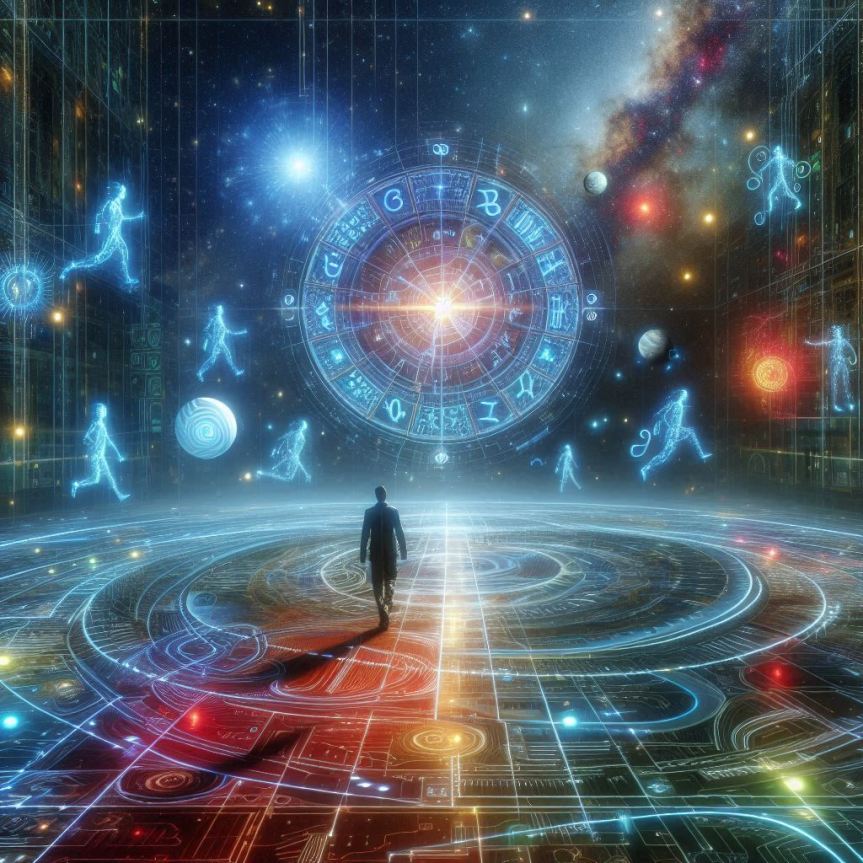
October 2025

As October unfolds, the world stands at a precipice, balancing on the edge of significant transformation and escalating turmoil. The convergence of celestial events and global developments paints a picture of a month where the forces of change are both challenging and illuminating.

The humanitarian crises in Northern Africa and the Horn of Africa continue to deepen. In Sudan, the city of El Fasher remains under siege, with over 260,000 residents trapped and facing extreme shortages of food and medical supplies. Despite international efforts, access for aid remains severely limited. Concurrently, countries such as Ethiopia, Somalia, and Kenya are experiencing severe droughts, leading to widespread famine. The FAO and WFP have issued early warnings about escalating food insecurity in these regions. These dire circumstances are compounded by the global shipping industry’s volatility, as reported by UNCTAD, which highlights disruptions due to rising geopolitical tensions and trade policies. The war in Ukraine, heightened Middle East conflicts, and rerouting ships around the Cape of Good Hope due to Red Sea disruptions are contributing to the instability, affecting the delivery of humanitarian aid.

Politically, the United States faces internal and external challenges. President Donald Trump is scheduled to meet with Australian Prime Minister Anthony Albanese on October 20 in Washington. Discussions are expected to focus on the AUKUS security pact, particularly the provision of nuclear-powered submarines to Australia amid regional tensions with China. Meanwhile, the European Union grapples with internal divisions and external pressures. The European Political Community will convene on October 2 in Denmark, bringing together leaders from across the continent to discuss pressing issues such as migration, energy security, and economic stability. These political events coincide with significant astrological transits, including Mercury’s entry into Scorpio on October 6, which may intensify communication and uncover hidden truths, and the Full Moon in Aries on the same day, heightening emotions and bringing issues to a head.

In the realm of space and science, October offers moments of awe and wonder. The appearance of Comet C/2025 A6 (Lemmon) symbolizes hope and renewal. Its brightness amidst the darkness serves as a reminder that even in challenging times, there is light to guide us forward. The Orionid meteor shower, peaking on October 20, provides opportunities for reflection and connection with the cosmos. These celestial events encourage us to pause and reflect on our place in the universe, offering moments of clarity and perspective.

Astrologically, October is a month of introspection and transformation. Mercury’s transit through Scorpio encourages deep introspection and transformation, favoring uncovering hidden truths and engaging in meaningful conversations that can lead to personal and collective growth. The Aries Full Moon brings heightened emotions and a desire for independence, urging us to release what no longer serves us and to embrace courage in the face of adversity. Venus’s entry into Libra on October 13 promotes harmony, balance, and cooperation, offering a chance to mend fences and build bridges. Pluto’s direct motion in Aquarius on October 13 signifies a shift towards collective transformation, urging us to adapt and innovate as societal structures and systems undergo significant changes.

In these turbulent times, it’s essential to find balance and hope. Engaging in community efforts, practicing mindfulness and reflection, and staying informed and involved can provide clarity and peace amidst chaos. By embracing these practices, we can navigate the challenges of October with resilience and optimism, fostering a sense of unity and purpose in the face of adversity.