or Pisces, the week of 3–9 August 2026 brings a quiet but powerful period of inner awareness as the world moves towards the total solar eclipse on 12 August. Astronomically, the Sun continues through Leo while the Moon advances towards its alignment between Earth and the Sun, creating a growing celestial focus. From a Geo-Zenith perspective, this eclipse build-up reflects the delicate relationship between cosmic cycles and Earth’s living systems, with increasing attention on climate, oceans, collective emotions and humanity’s connection with nature. Pisces, as the sign most attuned to the unseen currents of life, may sense these changes before they become fully visible.
Astrologically, this is a week for compassion, healing and quiet preparation rather than forcing direction. The approaching eclipse may bring awareness of old emotional patterns, dreams that have been waiting for attention and the need to release what has quietly become a burden. Pisces can sometimes absorb the fears and confusion of the wider world, but this period asks you to return to your own centre and distinguish intuition from overwhelm. Your sensitivity is not a weakness; it is a way of understanding what needs care, healing and renewal.
Way through: Protect your inner peace, trust your deeper knowing, and turn your compassion into gentle actions that create healing for yourself and the world around you.
Where we stand now is not simply “astrology” but a measurable celestial configuration. On 20 February 2026 at 11:54 UTC, Saturn and Neptune met at 0°45′ Aries, initiating a cycle associated historically with ideological restructuring and the dissolution of existing political narratives. Two weeks later, on 3 March 2026 at 06:37 UTC, a total lunar eclipse at 12°53′ Virgo forced a global moment of exposure—systems, supply chains, health structures and governance weaknesses laid bare. Meanwhile Jupiter stationed direct at 15°05′ Cancer on 10 March 2026, while Mercury stationed direct at 8°29′ Pisces on 20 March, the same day the Sun crossed the Aries equinox. Astronomically, these events coincide with an unusual clustering of planets along the ecliptic and the recent six-planet alignment of 28 February 2026, when Mercury, Venus, Jupiter, Saturn, Uranus and Neptune appeared along the same arc of sky.
The immediate sky picture continues to tighten through April. Mars enters Aries on 9 April 2026 at 15:36 UTC, followed by a series of sharp interactions: Mars conjunct Neptune on 13 April (00:29 UTC) and Mars conjunct Saturn on 19 April (17:43 UTC). In the physical sky this corresponds with a visible alignment of Mercury, Mars, Saturn and Neptune around 18 April, appearing low before sunrise. At the same time a potentially bright visitor—comet C/2025 R3 (PANSTARRS)—is predicted to become visible toward the end of April 2026, adding another symbolic marker in the heavens. Astronomically these objects are simply following orbital mechanics, but historically such compressions of planetary motion tend to coincide with periods when political structures strain under their own contradictions.
From a geo-zenith perspective the sky is pointing toward restructuring rather than collapse. The Saturn–Neptune cycle dissolves illusions while demanding new forms, yet those forms are not visible yet; they tend to emerge years after the conjunction. The difficulty lies on Earth, not in the sky: ageing leadership classes, ideological rigidity and the tendency of governments to double down on propaganda precisely when transparency is required. Under Mars activating the Saturn–Neptune conjunction through April, anger, confusion and misdirection easily combine. This is the phase where misinformation multiplies and where the most disciplined response is restraint: observe carefully, verify information, and resist the urge to fall into the simplistic binaries that geopolitical narratives demand.
By mid-July 2026, the planetary field spreads slightly, offering a temporary window of relative breathing space. Astronomically the sky features calmer configurations such as the Moon–Mars–Pleiades grouping on 11 July 2026, a quieter geometric arrangement compared with the compressed April sky. Yet the larger cycle remains active. The Saturn–Neptune conjunction marks the beginning of a long restructuring of global systems—financial, political and ideological. What replaces the present order cannot yet be clearly seen, because such structures tend to emerge gradually from collective necessity rather than deliberate design.
The practical message is simple. This period requires patience, compassion and clear thinking. Some people will be in positions where they can act; others will feel powerless while watching events unfold. Both experiences are part of the same cycle. In such periods the most rational response is to care for one’s immediate circle, question every narrative, avoid taking reflexive sides, and allow the planetary pattern itself to show when genuine windows of opportunity appear. Historically these cycles are remembered not only for crisis but also for the quiet emergence of new moral frameworks—often built by ordinary people long before governments notice them.
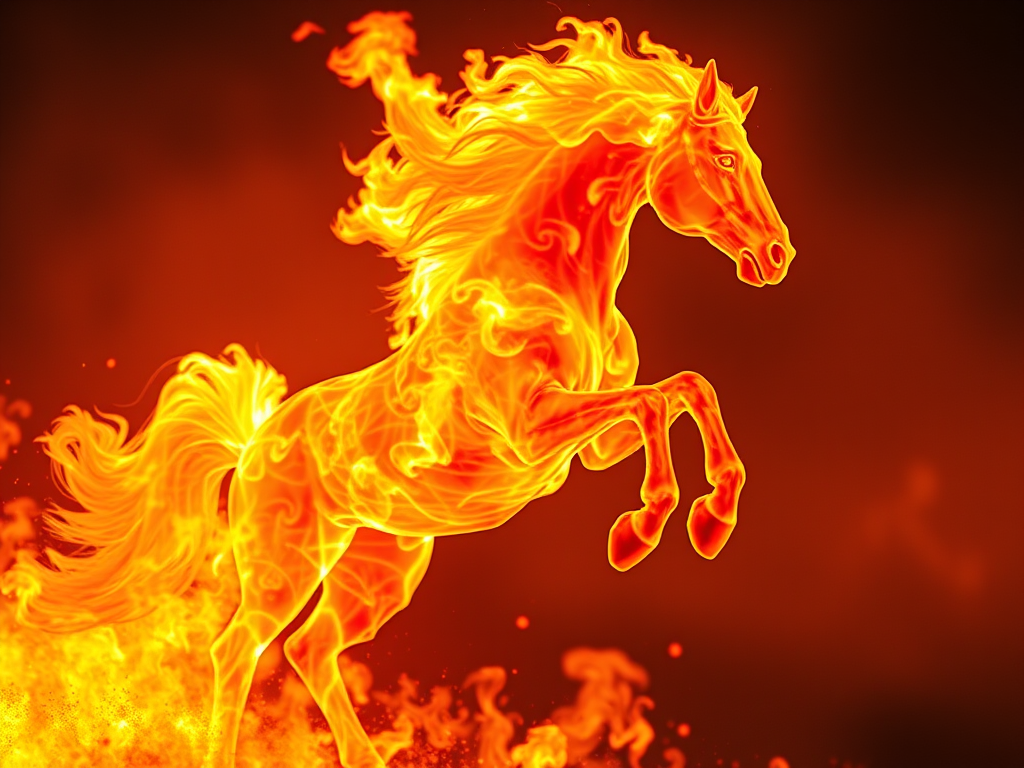
The Year of the Fire Horse begins on 17 February 2026 under an already charged sky, and history suggests this combination does not drift — it accelerates. Fire Horse years arrive every sixty years, and when they do, they tend to coincide with sharp social inflection points. In 1966 the Cultural Revolution ignited and youth movements surged across the West. In 1906 San Francisco was shattered by earthquake and fire, forcing modern seismic reform. In 1846 war redrew continental borders. In 1786 economic unrest exposed governmental weakness and directly paved the way for constitutional redesign. These were not gentle transitions. They were catalytic moments when pressure met ignition.
What links those years is not simple chaos but structural exposure. Weak frameworks crack first. Fire Horse energy amplifies momentum — political, social, ideological. In 2026 we enter with geopolitical conflict already active, democracies strained by polarisation, institutions mistrusted, AI reshaping labour and information at extraordinary speed, and climate stress compounding economic instability. This is not a stable foundation. Under Fire Horse conditions, such tensions do not simmer; they move. Protest movements may sharpen. Leadership turnover may accelerate. Alliances may fracture or realign with unusual speed.
Yet precedent also shows that these years do not merely destroy — they force redesign. The earthquake of 1906 transformed building standards. The unrest of 1786 strengthened constitutional governance. The upheavals of 1966 permanently altered civil rights, cultural norms and generational power. Fire does not only consume; it clears ground for new architecture. In 2026, technological governance, sovereignty debates, economic systems and leadership models are all under review. The speed of change may feel destabilising, but velocity does not equal collapse. It signals transition under pressure.
This year is unlikely to be quiet. It will likely be decisive. The Fire Horse runs, and when it runs, hesitation becomes costly. Old systems that cannot adapt will be dismantled more quickly than expected. But the same momentum can build as well as break. The question is not whether change arrives — it already has. The question is whether it is shaped consciously, or allowed to erupt uncontrolled. History suggests the Fire Horse year rewards bold restructuring and punishes stagnation. The pace will be fast. The outcome depends on how deliberately we choose to ride it.

 ASTROLOGY CRUCIBLE