
After the eclipse

Image from internet – lovely aurora borealis (please tell me who made this)

The eclipse has passed, but the week of 17 to 23 August is not a return to ordinary skies. We are now living in the aftermath of the 12 August Leo solar eclipse, with the newly changed Aquarius–Leo nodal axis still setting the direction and the Sun completing its passage through Leo before entering Virgo on 23 August. Mercury and Jupiter remain together in Leo, carrying forward the great question of the eclipse: what kind of leadership, creativity and collective future are we actually prepared to build? Pluto is retrograde in Aquarius and has now gone out of bounds, adding an unusually powerful, unruly quality to the transformation of collective systems, while Uranus in Gemini continues to break open old assumptions about information, communication and intelligence. The eclipse was the fulcrum; this week begins the process of living with what it revealed. The Perseids are still active until 24 August, although their peak has passed, so Earth is still moving through the debris stream of Swift Tuttle while the sky gradually changes from the darkness of eclipse week towards a waxing Moon.

The physical heavens remain unusually active. A magnetic filament erupted from the Sun on 14 August and launched a CME towards Earth, with models predicting a glancing encounter around 17 August and possible G1 geomagnetic storm conditions; the Met Office likewise expects CME arrival on the 17th, followed from the 18th by coronal hole high speed solar winds. This means the week opens with Earth still inside a disturbed solar environment, with the possibility of auroral activity at northern latitudes as the solar wind changes. Astrologically, the same layering continues: Saturn retrograde in Aries asks us to reconsider what we are building, Neptune retrograde in Aries dissolves old certainties, Pluto retrograde in Aquarius turns the collective transformation inward, and Chiron retrograde in Taurus keeps returning us to the wound of land, resources and physical security. Mars in Cancer brings the question of protection, water, home and nourishment into the foreground. On 17 August Mercury trines Saturn and Venus sextiles Jupiter, offering something the eclipse week lacked: a chance to give the new vision structure, while Venus in Libra seeks cooperation rather than conflict.

Then comes the grounding. The First Quarter Moon arrives on 20 August and passes through Scorpio before moving into Sagittarius, bringing increasing emotional intensity followed by a need to understand the larger picture; on 19–20 August it passes close to Antares, the red heart of Scorpius, while later on 22–23 August it moves through Sagittarius towards the centre of the Milky Way. On 21 August Venus opposes retrograde Saturn, asking what relationships, agreements and values can actually withstand reality, while the Sun approaches the end of Leo and finally enters Virgo on 23 August, bringing the enormous symbolic fire of the eclipse down into practical earthly work. This is the crucial movement now: from revelation to application, from seeing the future to doing something about it. The world may still feel suspended between what is ending and what has not yet fully arrived, but the direction is changing. The eclipse opened the door; this week asks us to walk through it, take stock of what remains, and begin the painstaking work of making the new world habitable.
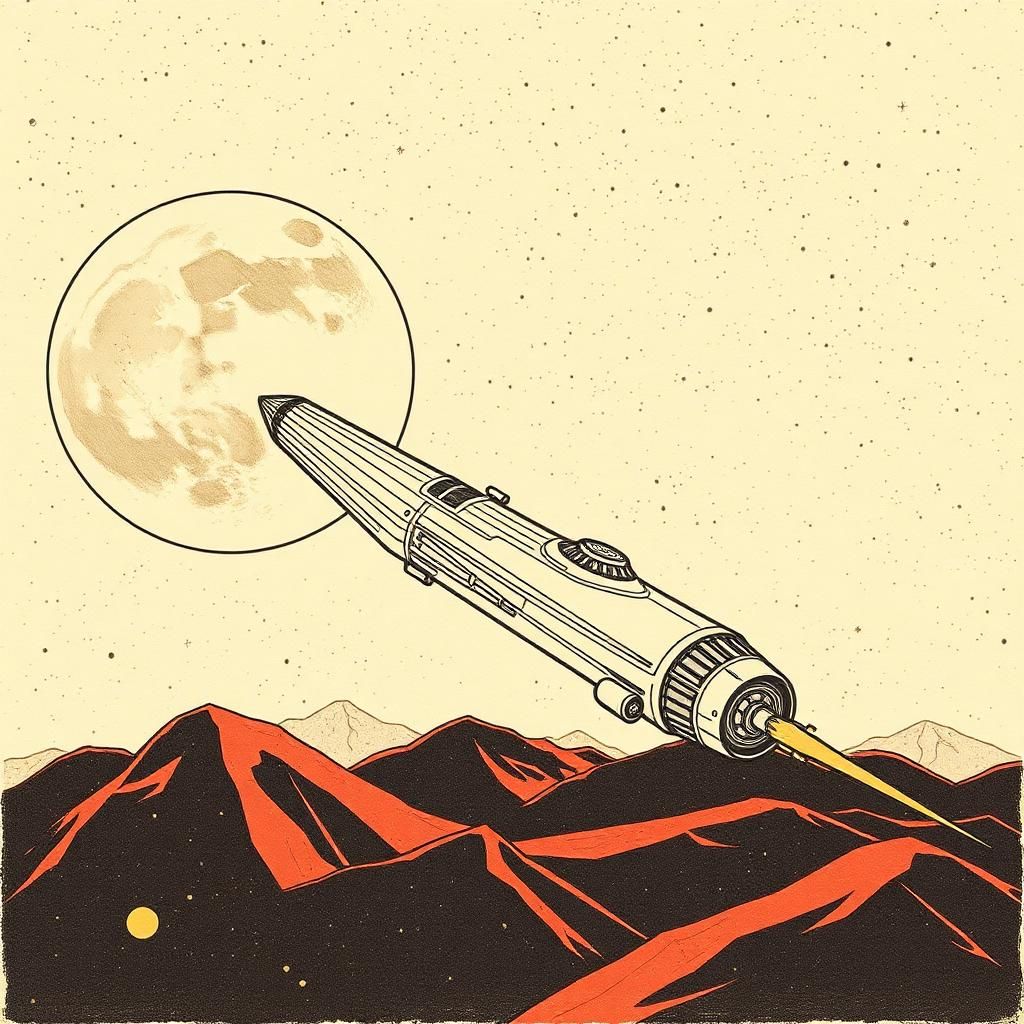
The astrology of the Lunar eclipse

The total lunar eclipse of 7 September 2025 falls at about 15° Pisces, a mutable water sign that dissolves boundaries and exposes the porousness between fact and imagination. Astronomically this is a deep eclipse, with the Moon fully immersed in Earth’s shadow for over an hour, visible across Europe, Africa, Asia and Australia. In astrology, eclipses on this axis tend to signal endings and closures, particularly of emotional, spiritual, or collective narratives that have outlived their function. Pisces colours the event with themes of compassion, sacrifice, and the pull between dream and disillusion.

What sharpens the tone of this eclipse is Saturn’s strong involvement in Pisces alongside it. Saturn insists on accountability and structure, so the otherwise fluid Piscean themes are given a stern, even karmic edge. Loose boundaries and sentimental evasions will not hold; decisions about what to release or where to draw a line may feel final, and the consequences tangible. In practice, this looks like institutions of care, religion, art, and humanitarian work facing calls to take responsibility, while individuals with mutable sign placements between 13° and 17° will be asked to let go of outdated roles and commitments.

Uranus adds another layer by stationing retrograde just the day before. This sudden electric jolt can bring surprises, reversals, or revelations around information and technology, transforming the eclipse from an inner tide into external disruption. It suggests that what dissolves in Pisces may swiftly be exposed in public space, through leaks, shifts in networks, or shocks to systems we assumed were stable. The combination of Saturn’s gravity with Uranus’s shocks makes this eclipse a threshold moment: endings that are not just private but structural, with wider collective reverberations.

For personal and collective navigation, the eclipse marks a point of closure and clarity. It is a moment to acknowledge what has run its course, to take responsibility for boundaries, and to prepare for sudden adjustments. The overarching lesson is that compassion without structure becomes enabling, and structure without compassion becomes brittle. In the weeks and months after, as the dust of Uranus’s reversals settles, the Saturn-Pisces demand will remain: to bring integrity, accountability and clarity into those spaces of imagination and empathy where boundaries have long blurred

The lunar eclipse

image by Martin Adams
Image by Martin Adams

On the night of September 7, 2025, Earth’s only satellite, our moon, will glide into alignment with the Sun and our planet, entering a grand total lunar eclipse. As Earth casts its darkest shadow – the umbra – fully across the lunar surface, the full September Moon will take on a haunting, coppery-red glow, the phenomenon is commonly known as a “Blood Moon.” Unlike a solar eclipse that flashes by in minutes, this lunar event will unfold with dignified duration and atmospheric depth, inviting quiet contemplation rather than breathless exclamation.

The eclipse will commence with the penumbral phase as Earth’s faint outer shadow begins to dim the Moon, starting around 15:28 UTC. Gradually moving deeper, the Moon enters partial eclipse a little before 16:27 UTC, until at roughly 17:30 UTC, totality begins. At this moment, the Moon will be fully immersed in Earth’s umbra and its glowing face transformed by sunlight filtered through our atmosphere. This total phase will reach its apex at approximately 18:11 UTC and will linger for about eighty-three minutes, finally ending near 18:52 UTC, as the Moon emerges and begins the reverse shadow dance—partial eclipse until about 19:56 UTC and penumbral retreat completed by 20:55 UTC.

This eclipse is striking not only for its beauty but also for its astronomical rhythm. It belongs to the venerable Saros series 128, being the 41st of seventy-one eclipses, each spaced by approximately 18 years. It occurs when the full Moon lies near the ascending node of its orbit, slightly southward, with a gamma value of about –0.275, denoting the Moon passing somewhat south of the central line of Earth’s shadow. Its umbral magnitude, roughly 1.36, indicates that the Moon delves well into the shadow’s core.

In practical terms, this eclipse will be observed fully across vast expanses of our planet. Viewers in Europe, Africa, Asia, and Australia will witness the entire spectacle, while those in the Americas will unfortunately miss it altogether – this is an Eclipse of the Eastern Hemisphere. Astronomical visibility is generous: around 85 percent of the global population will see at least part of the total phase, with roughly 76 percent able to catch the entirety of totality, and about 60 percent afforded the full run of every phase from beginning to end.

For observers, the sight will be marvelously safe and accessible – no special eyewear is needed, unlike solar eclipses. With clear Eastern horizons, one might witness the waning silver face of the Moon darken gently and then deepen into burnished red as if glowing from within, before slowly emerging again into ordinary twilight.

And as an astronomical encore, this cosmic choreography is framed by an eclipse season: two weeks later, on September 21, 2025, Earth will experience a partial solar eclipse, neatly bookending the lunar event

September 2025

September 2025 is dominated by the interplay of eclipses, Mercury’s direct station, and the ongoing influence of slow-moving outer planets, creating a month that feels simultaneously disruptive and clarifying. The lunar eclipse on 7 September at 6° Aries opens the month with sudden revelations and heightened tension in areas of personal assertion, leadership, and conflict. Across the globe, this energy mirrors intensifying geopolitical pressures, social unrest, and urgent calls for accountability. Situations that have been simmering for months now surface, exposing vulnerabilities in both governance and institutions, as well as latent unrest among populations. On an individual level, the eclipse encourages people to confront hidden patterns of aggression, ambition, or neglect before they escalate further.

The solar eclipse of 21 September at 28° Virgo carries a subtler but equally powerful energy. Its focus on work, daily structures, health, and collective systems forces scrutiny of efficiency, productivity, and integrity. Globally, expect shifts in logistics, supply chains, and organisational structures, with governments, corporations, and international bodies needing to revise processes under pressure. This eclipse is an opportunity for radical reform, though it may feel disruptive at first: outdated systems, methods, and assumptions are being dismantled to make way for more sustainable approaches. Mercury turning direct on 15 September aids in communication, negotiations, and problem-solving, helping to clarify matters that seemed stuck during the retrograde, particularly in international relations, trade agreements, and domestic policy adjustments.

The outer planets continue to provide long-term context for September’s turbulence. Jupiter in Cancer encourages reassessment of shared resources, humanitarian responsibilities, and collective emotional intelligence, offering the potential for constructive growth amid chaos. Saturn retrograde in Pisces urges a sober evaluation of responsibilities, boundaries, and ethical commitments, both personally and collectively. Pluto in Aquarius continues to challenge power structures and social norms, reshaping relationships, technology, and community dynamics at a systemic level. The lingering influence of eclipses combined with these slow-moving energies signals a month where change is unavoidable: some shifts will feel abrupt, others gradual, but all are oriented toward restructuring and greater alignment with long-term necessity.

The path forward for September is discernment and adaptability. Individuals and nations alike are asked to recognise where old patterns are failing and where new strategies, alliances, or structures are required. Tension between entrenched interests and emerging realities will be unavoidable, but those who focus on clarity, integrity, and practical solutions are positioned to navigate the month with strategic advantage. The eclipses illuminate hidden truths, Mercury restores communication channels, and the outer planets provide the framework for reform. September is less about immediate gratification and more about building resilience, discerning opportunities in disruption, and aligning both action and intention with the deeper rhythms now unfolding globally and personally.