The lunar eclipse

image by Martin Adams
Image by Martin Adams

On the night of September 7, 2025, Earth’s only satellite, our moon, will glide into alignment with the Sun and our planet, entering a grand total lunar eclipse. As Earth casts its darkest shadow – the umbra – fully across the lunar surface, the full September Moon will take on a haunting, coppery-red glow, the phenomenon is commonly known as a “Blood Moon.” Unlike a solar eclipse that flashes by in minutes, this lunar event will unfold with dignified duration and atmospheric depth, inviting quiet contemplation rather than breathless exclamation.

The eclipse will commence with the penumbral phase as Earth’s faint outer shadow begins to dim the Moon, starting around 15:28 UTC. Gradually moving deeper, the Moon enters partial eclipse a little before 16:27 UTC, until at roughly 17:30 UTC, totality begins. At this moment, the Moon will be fully immersed in Earth’s umbra and its glowing face transformed by sunlight filtered through our atmosphere. This total phase will reach its apex at approximately 18:11 UTC and will linger for about eighty-three minutes, finally ending near 18:52 UTC, as the Moon emerges and begins the reverse shadow dance—partial eclipse until about 19:56 UTC and penumbral retreat completed by 20:55 UTC.

This eclipse is striking not only for its beauty but also for its astronomical rhythm. It belongs to the venerable Saros series 128, being the 41st of seventy-one eclipses, each spaced by approximately 18 years. It occurs when the full Moon lies near the ascending node of its orbit, slightly southward, with a gamma value of about –0.275, denoting the Moon passing somewhat south of the central line of Earth’s shadow. Its umbral magnitude, roughly 1.36, indicates that the Moon delves well into the shadow’s core.

In practical terms, this eclipse will be observed fully across vast expanses of our planet. Viewers in Europe, Africa, Asia, and Australia will witness the entire spectacle, while those in the Americas will unfortunately miss it altogether – this is an Eclipse of the Eastern Hemisphere. Astronomical visibility is generous: around 85 percent of the global population will see at least part of the total phase, with roughly 76 percent able to catch the entirety of totality, and about 60 percent afforded the full run of every phase from beginning to end.

For observers, the sight will be marvelously safe and accessible – no special eyewear is needed, unlike solar eclipses. With clear Eastern horizons, one might witness the waning silver face of the Moon darken gently and then deepen into burnished red as if glowing from within, before slowly emerging again into ordinary twilight.

And as an astronomical encore, this cosmic choreography is framed by an eclipse season: two weeks later, on September 21, 2025, Earth will experience a partial solar eclipse, neatly bookending the lunar event
Solar flares – part two

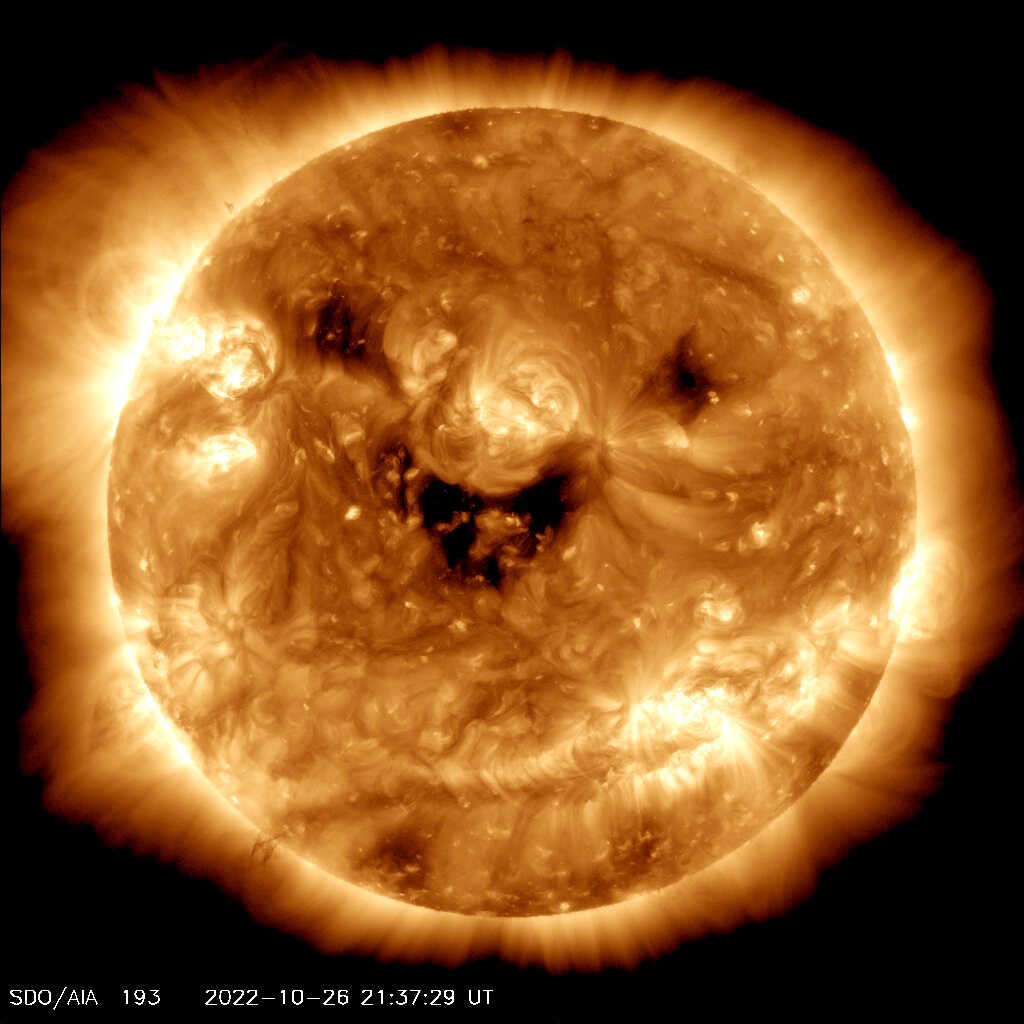
The human brain is sensitive to electromagnetic fluctuations, particularly in the 0.5–40 Hz range of natural brainwave activity (delta through gamma). Piezoelectric-like calcite microcrystals in the pineal gland transduce environmental electromagnetic signals into electrical or chemical responses, influencing circadian rhythms, hormone production, and thus also cognitive or emotional states. While the effects are subtle, they are measurable under controlled conditions and explain some behavioural or mood changes during geomagnetic disturbances.

Researchers note that periods of heightened solar activity correlate with shifts in collective energy, decision-making, and societal tension. Astrologers similarly interpret strong solar events as times of increased emotional volatility and sensitivity, both individually and collectively. Individual responses vary, but global geomagnetic shifts appear to align with periods of systemic stress, unusual weather patterns, or heightened awareness.

Astronomers, space agencies, and observatories monitoring the Sun emphasise that solar events interact with Earth’s magnetic field, affecting satellite operations, communications, and navigation systems. When combined with ongoing seismic, volcanic, and extreme weather activity, there is a complex network of environmental signals to which humans are subtly attuned, both physiologically and behaviourally. As we are also electromagnetic beings, having an, aura or electromagnetic field.

All solar activity produces measurable geomagnetic effects that influence brainwave patterns, pineal gland activity, and human emotional states. Astrological and scientific observations converge on the conclusion that these periods of heightened solar activity are associated with heightened sensitivity and shifts in collective behaviour. So, there is change happening now during these extreme solar conditions. We can all feel it, we can see it, we know – and soon we will have the eclipse season, which will truly be noticeable events – both inner and outer.

3I Atlas trajectory

The solar system is being traversed by an interstellar visitor of extraordinary proportions, known as 3I/ATLAS. Unlike the brief flyby of its predecessors, this object moves along a trajectory almost parallel to the ecliptic plane, threading through the inner planets at a retrograde inclination of 175 degrees. Its current velocity is around 58 kilometres per second, accelerating to roughly 68 kilometres per second as it nears perihelion on 29 October 2025. The object is enormous: estimates place its nucleus at 46 to 50 kilometres across, while its coma, rich in carbon dioxide and plasma, already spans nearly 700,000 kilometres which is half the diameter of the Sun! This dusty, electrically charged envelope renders this visitor highly active as it interacts with the solar wind and heliospheric currents, particularly during the heightened activity of our current solar maximum.

This trajectory will take it just above Mars in early October, past the asteroid belt, and later toward Jupiter by March 2026. Along the way, it will traverse the electromagnetic environment of the inner planets and their moons, and subtly influence dwarf planets such as Ceres, Haumea, Makemake, and Eris. Its plasma tail and ionised gases will interact with solar, ultraviolet and X-ray radiation, expanding and energising the coma, while the gravitational and magnetic fields of the planets will shape its outbound trajectory. Though no physical contact is expected with any planetary body, its presence represents a rare moment of systemic resonance, as interstellar material and electromagnetic energy thread through the solar system over the next few months.

From an astrological perspective, the geo-zenith alignments of this period intensify the already volatile planetary currents. September begins with two eclipses – the solar on the 7th and the lunar on the 18th—priming collective awareness and initiating subtle systemic shifts. We will already be aware that change is in the air. The object’s close passage to Mars coincides with a new moon and a superior conjunction with Earth, amplifying perception and reflection on structural and emotional frameworks. Its perihelion near the Sun acts as an energetic fulcrum, enhancing interactions across the Virgo-Pisces axis, while its outbound movement past Jupiter in March resonates with expansion, insight, and recalibration of broader societal and philosophical patterns. Dwarf planets and inner moons act as secondary nodes in this network, subtly modulating the energetic and astro-magnetic interplay. The world will be so changed – as will we.

3I/ATLAS is not just a celestial visitor but a long-time catalyst, threading the solar system with interstellar energy and interacting with both planetary fields and collective consciousness. Its trajectory and electromagnetic presence provide a unique opportunity to observe the intersection of cosmic physics and geo-zenith astrology, a rare alignment of astronomical and systemic resonance that will unfold over the coming months, leaving subtle yet tangible imprints on both our solar environment and our planetary awareness. We may even get more images and readings from our satellites and telescopes – so keep watching.

The eye of the storm

Many voices agree that the Aquarius Full Moon on August 9 is a pivot point – one that illuminates where you must let go, reinvent, and reorient. The feel and tone varies for everyone – for some, it’s hopeful and spirited; for others, it’s a confrontation with inner blocks needing release. The Aquarian Full Moon is a critical point for releasing outdated social norms and patterns, and revealing truths about collective and personal identity. This is a moment of aligning with higher awareness and letting go of what no longer serves.
Uranus is strongly activating this lunation, enabling visionary breakthroughs, creative thinking, and a reconfiguration of social systems and personal goals.
Which we all need now.

This Full Moon in Aquarius is widely seen as a moment of revelation – every astrologer will tell you this. It’s a time for shedding sentimental illusions in favor of clear, detached truth, especially regarding community, the family, the home, and one’s place within it.

There’s a strong emphasis on innovation and unconventional thinking, encouraging individuals to step into originality and expressive authenticity. This may be your only way out, our only way out. Step out of the box – at least in your thinking.

It’s a split message and there are mixed energies

It’s a chance for emotional release, new insight, and breaking through false narratives. This we must become clear on. We must see things clearly and think clearly too.
But it is also a time we can expect confusion, false projection, and misdirection in interpersonal conflict or political messaging. Especially the political messaging – we are all being lied to, big time. It’s time to know this and point it out.

This Full Moon in Aquarius is not peaceful, but it is pivotal. It exposes fault lines – both in the outer world and within.
The key is not to react, but to observe.
The eye of the storm is not an escape – it’s where the truth lands.